
Authentication
How to configure the authentication.
Mkdirs uses Auth.js v5 for authentication, supports email/password, GitHub, and Google authentication.
Configuration
Generate the AUTH_SECRET variable
AUTH_SECRET is a random value, and you can generate one via running:
npx auth secret

# or
openssl rand -base64 32
Then set it to the .env file.
# .env
# [required]
AUTH_SECRET=secret
[Optional] Get the GitHub client variables
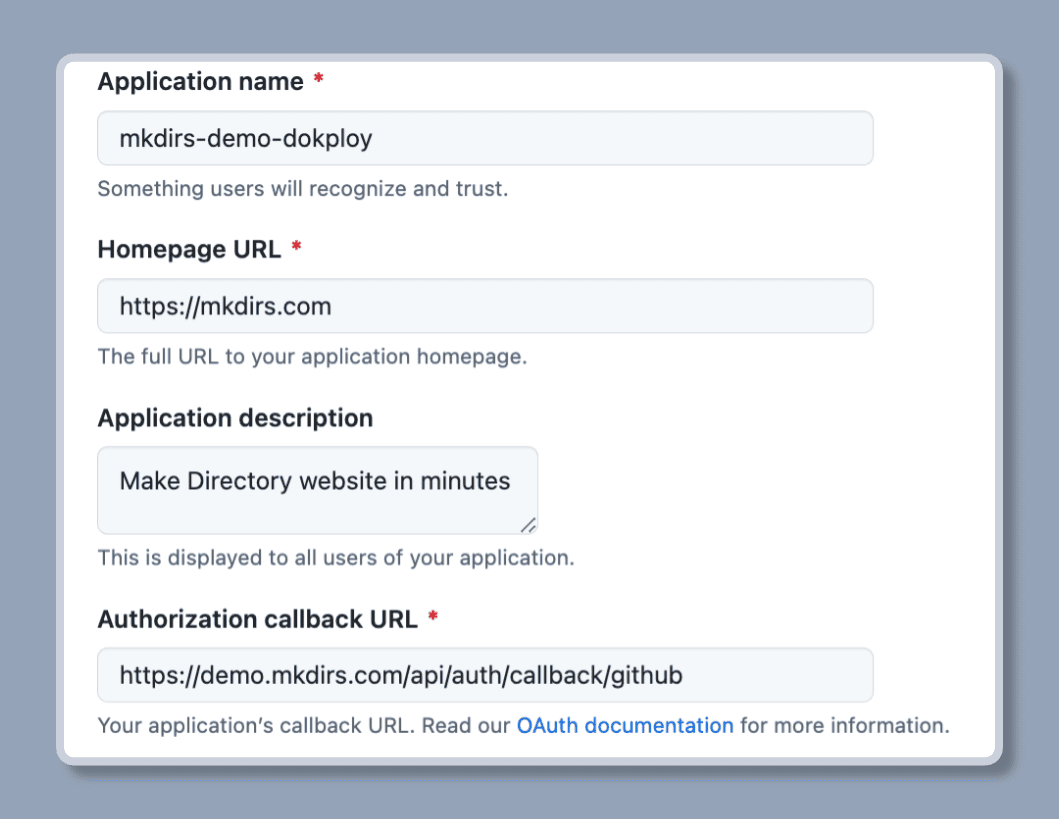
If you want to use GitHub as an OAuth provider, you need to update the AUTH_GITHUB_ID and AUTH_GITHUB_SECRET variables.
Follow the steps here to get the client_id and client_secret from the GitHub Developer Settings.
For the callback URL, it is https://your-domain.com/api/auth/callback/github or http://localhost:3000/api/auth/callback/github for local development.
# .env
# [only required if you want to support GitHub authentication]
AUTH_GITHUB_ID = your_secret_client_id
AUTH_GITHUB_SECRET = your_secret_client
Please create two different OAuth applications in the GitHub Developer Settings, one for the production environment and one for the development environment. Don't use the same OAuth application for both environments.
[Optional] Get the Google client variables
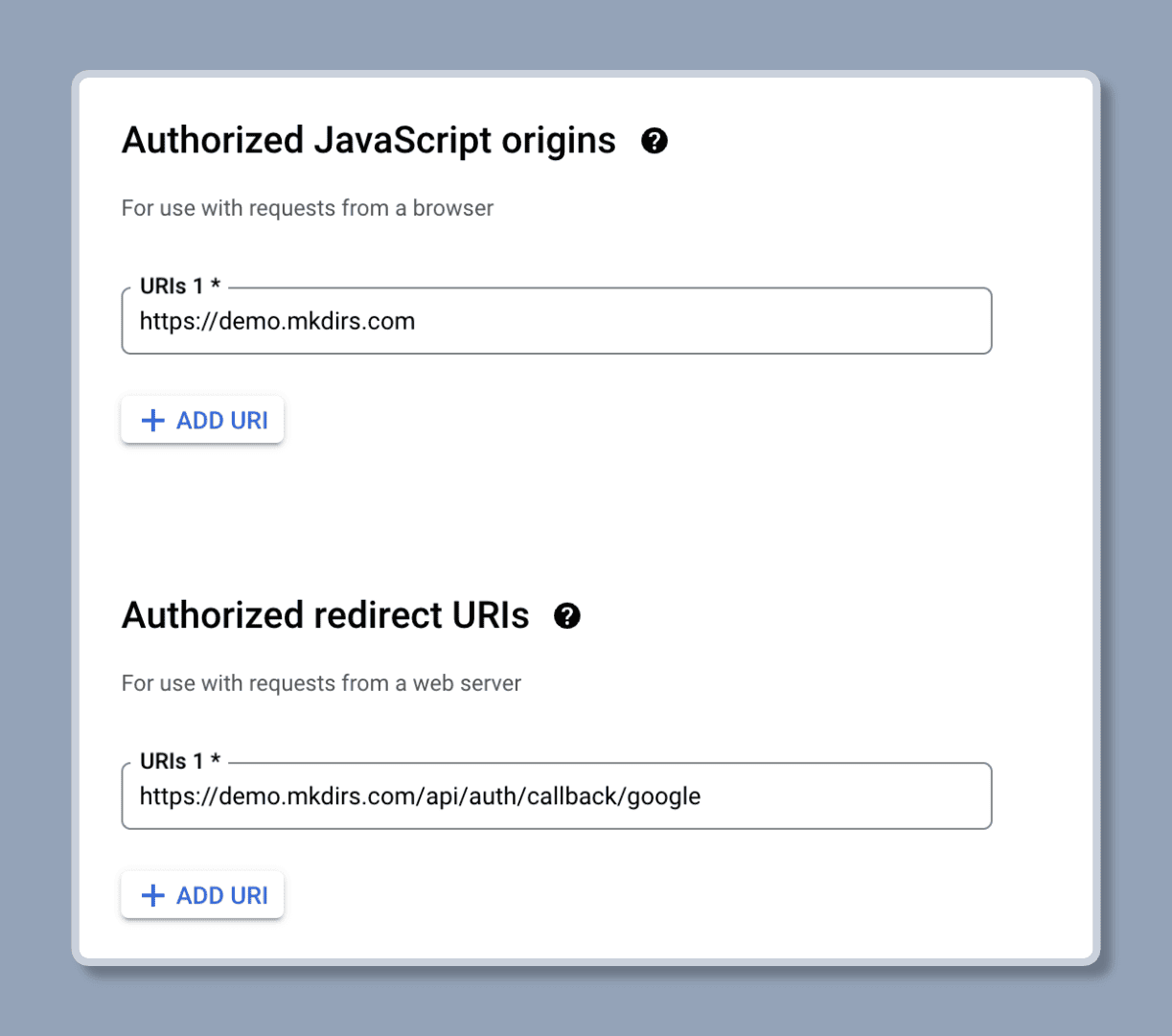
If you want to use Google as an OAuth provider, you need to update the AUTH_GOOGLE_ID and AUTH_GOOGLE_SECRET variables.
You can get the client_id and client_secret from the Google Cloud Console.
For the callback URL, it is https://your-domain.com/api/auth/callback/google or http://localhost:3000/api/auth/callback/google for local development.
# .env
# [only required if you want to support Google authentication]
AUTH_GOOGLE_ID = your_secret_client_id.apps.googleusercontent.com
AUTH_GOOGLE_SECRET = your_secret_client
Please create two different OAuth applications in the Google Cloud Console, one for the production environment and one for the development environment. Don't use the same OAuth application for both environments.
-
Please note that the environment variables are different in development and production environments, make sure to create two different OAuth applications for the production and development environments.
-
If you still have trouble with the authentication, for example,
redirect_uri_mismatchor other issues, you can try to add the following environment variables to the.envfile, only in the production environment.# .env AUTH_TRUST_HOST=true AUTH_URL=https://your-domain.com/api/auth
Video tutorial
If you are interested in Next Auth V5, you can refer to the following video tutorial, it is a more advanced guide for Next Auth V5, so much better than the official documentation.
Further Reading
Last updated on